TABLE OF CONTENTS
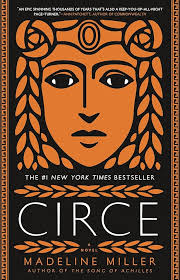
Exiled and underestimated, the witch Circe forges her power alone. In Circe, Madeline Miller reclaims a minor mythological figure and gives her a voice full of strength, defiance, and hard-won selfhood.
Introduction
Madeline Miller’s Circe is not just a retelling—it’s a reawakening. Drawing from Homeric myth, Miller crafts a lush, lyrical novel that places the infamous enchantress at its center and reveals a story of transformation, survival, and self-creation. Circe, daughter of the sun god Helios and the nymph Perse, is born into a divine world that scorns her. Lacking the beauty of her siblings and dismissed as weak, she is eventually exiled for discovering a forbidden magic: witchcraft. Alone on the island of Aiaia, Circe begins the long, painful journey of becoming—not a god, not a mortal, but something entirely her own.
A Goddess Cast Aside
The novel begins with Circe’s early life among the gods—a world of cruelty, vanity, and indifference. From the start, she is different: curious, empathetic, and deeply aware of her own limitations. When she discovers her ability to work magic, the gods recoil. Threatened by her power, they banish her. Miller uses this exile not as punishment but as possibility; Circe’s solitude becomes fertile ground for her growth. She studies, practices, and refines her skills—not only in herbs and spells, but in the quiet work of understanding herself. Her banishment becomes the birthplace of her becoming.
Encounters With Mortals and Myths
Throughout the novel, Circe’s island is visited by gods, monsters, and mortals—each encounter adding new texture to her evolution. She crosses paths with Hermes, Daedalus, Medea, and most famously, Odysseus. But unlike traditional myth, these meetings do not define her—they challenge her, reflect her, and ultimately help her see where she stands. Her relationship with Odysseus is one of mutual respect and complexity, revealing both tenderness and impermanence. Miller weaves these legendary figures into Circe’s story without letting them overshadow her. They serve not as saviors or threats, but as milestones on her personal journey.
The Burden and Power of Transformation
Circe’s magic is deeply symbolic—it is a tool of change, control, and rebellion. Her spells are often used in self-defense, turning would-be rapists into pigs, or protecting her child from divine wrath. But more than that, her magic mirrors the emotional transformations she undergoes. She is not static—she grieves, learns, hardens, softens, and evolves. In a world that constantly tries to define her—as monster, temptress, outcast—she chooses instead to define herself. Miller uses Circe’s magic as a metaphor for the kind of power women are so often denied: the power to shape one’s own destiny.
A Voice of Her Own
One of the novel’s greatest achievements is the voice Miller gives Circe—measured, reflective, and unmistakably human. The prose is elegant without being ornate, and the first-person perspective allows readers to grow with Circe across centuries. We see her mistakes, her fears, her joys, and her fierce protectiveness. This intimacy allows for a deep emotional connection, transforming a mythological figure into a living, breathing woman. In the final chapters, Circe faces a final, radical choice that separates her once and for all from the gods. It’s a powerful ending—not of escape, but of self-claiming.
Conclusion
Circe is a story of defiance, endurance, and the beauty of becoming. With lyrical prose and emotional depth, Madeline Miller takes a woman scorned by myth and gives her the dignity of complexity. The novel is not only a feminist reclamation of a forgotten figure, but a timeless meditation on solitude, strength, and transformation. In reclaiming Circe’s story, Miller also invites us to reflect on our own: Who tells our story? Who defines our worth? In the end, Circe offers a quiet yet thunderous answer—only we can.
WRITTEN BY

CONRIBUTORS


BOOKS DISCUSSED