TABLE OF CONTENTS
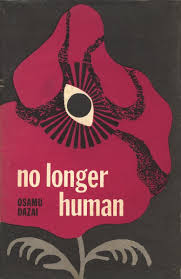
Told through the fragmented confessions of a lost soul, No Longer Human is a bleak, haunting descent into alienation. Osamu Dazai’s most famous novel confronts the unbearable weight of disconnection, shame, and self-erasure.
Introduction
First published in 1948, No Longer Human remains one of the most harrowing portrayals of existential despair in modern literature. Loosely autobiographical, the novel follows Ōba Yōzō, a man who struggles to present a mask of normalcy while internally unraveling. Written in a series of notebooks discovered after Yōzō’s disappearance, the story is framed as a confession—an intimate, often excruciating record of his descent into isolation and nihilism. Dazai offers no illusions of redemption. What he provides instead is an unflinching look at what it feels like to live without belonging—to be human in form but not in feeling.
The Art of Disguise
Yōzō’s life begins in artifice. From childhood, he learns to mask his confusion and emptiness with humor and charm, performing the role of a well-adjusted person while feeling like a ghost in his own body. This false self becomes his shield against a society he cannot understand or connect with. Dazai captures this performative existence with cutting precision, showing how the pressure to appear “normal” can become a prison of its own. Behind the jokes and smiles, Yōzō feels utterly alien, unable to connect with those around him and terrified of being exposed as hollow.
Spiraling into Oblivion
As Yōzō grows older, the cracks in his mask widen. His efforts to numb his despair—through alcohol, women, and withdrawal—only deepen his sense of dislocation. Dazai’s prose is stark and unadorned, mirroring the emotional numbness of his narrator. There is no grand epiphany, only a slow sinking into the certainty that he does not and cannot belong. These passages are among the darkest in the novel, yet they resonate with a brutal honesty that gives them strange power. Yōzō does not cry out for sympathy—he simply documents what it means to disappear while still being alive.
Society as the Enemy
Throughout the novel, Dazai casts a critical eye on the postwar Japanese society that demands conformity and punishes deviation. Yōzō’s failures are not just personal—they reflect a world that has no room for vulnerability or ambiguity. He is labeled deviant, mad, criminal—everything except human. This societal rejection is mirrored by the medical and legal institutions meant to help him, which instead strip him further of agency and dignity. Dazai invites the reader to consider how society defines worth and sanity—and how quickly it abandons those who fall outside those lines.
A Legacy of Ruin
By the novel’s end, Yōzō is physically and emotionally spent, institutionalized and erased. He does not recover or find hope; he merely persists as a shell of himself. The bleakness of this conclusion is what gives the novel its unsettling power. Rather than offer a path to healing, Dazai leaves us with the residue of Yōzō’s inner world—lonely, bleak, and devastatingly real. In doing so, he confronts the reader with uncomfortable questions: What does it mean to be human? And what happens to those who cannot perform that role?
Conclusion
No Longer Human is not a story of redemption—it is a confession of collapse. With painful clarity, Osamu Dazai exposes the internal life of a man slowly fading from society, unable to find peace within himself or connection with others. The novel resonates because it gives voice to the unspeakable—the quiet horror of living without meaning, love, or place. Dazai’s brutal honesty offers no comfort, but it does offer recognition, especially to those who have felt similarly adrift. This is literature at its most raw and courageous: a scream hidden inside a whisper.
WRITTEN BY

CONRIBUTORS


BOOKS DISCUSSED